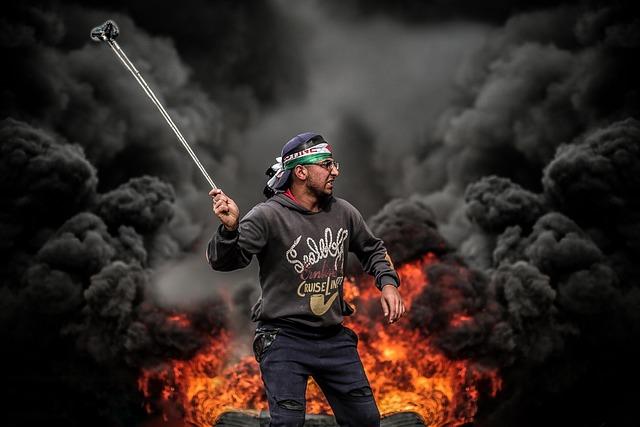
The trial continues this week as a group of Gaza protesters face legal proceedings for their dramatic blockade of the Golden Gate Bridge. The demonstration, which drew widespread attention for its bold stance on Palestinian rights, has sparked a contentious debate over civil disobedience and public safety. As the defendants defend their actions in court, questions arise over the intersection of political protest and law enforcement in one of America’s most iconic landmarks.
Trial Advances Amidst High Tensions Over Gaza Protesters Blocking Iconic Bridge
The courtroom remains charged as defendants face charges related to their dramatic protest on the Golden Gate Bridge. The blockade, organized in solidarity with Gaza, ignited a fierce debate about civil disobedience and public safety. Protesters assert their right to peaceful demonstration, emphasizing the urgency of global attention to the ongoing humanitarian crisis. Meanwhile, prosecutors argue that the blockade endangered lives by disrupting vital traffic flow on one of San Francisco’s busiest landmarks.
- Protesters’ stance: Nonviolent resistance, awareness raising, and moral obligation
- Legal focus: Public endangerment, unlawful assembly, and obstruction charges
- Community response: Divided opinions, with some praising courage and others condemning disruption
| Charge | Defendants | Potential Sentence |
|---|---|---|
| Unlawful Assembly | 12 | Up to 6 months |
| Obstruction of Traffic | 15 | Fines up to $1,000 |
| Public Endangerment | 7 | Up to 1 year |
Legal Arguments Focus on Public Safety and First Amendment Rights
In court, prosecutors emphasized the potential dangers posed by the Golden Gate Bridge blockade, arguing that the defendants’ actions threatened the safety of motorists and first responders. They presented evidence outlining how the disruption hampered emergency vehicles and risked causing serious accidents, underscoring the government’s responsibility to maintain public order on critical infrastructure. The district attorney’s office highlighted that while peaceful protest is protected, the scale and method of this demonstration crossed legal boundaries by endangering lives and impeding traffic flow.
Conversely, defense attorneys centered their arguments on the constitutional protections guaranteed by the First Amendment. They asserted that the protest was a nonviolent expression of political speech against international conflict and was conducted with the intent to raise awareness rather than cause harm. To support their case, the defense cited precedents where courts upheld the right to assemble, emphasizing that public safety concerns must be balanced against fundamental civil liberties:
- Nonviolent action: Stressing peaceful intent and prior notifications to authorities.
- Historical precedent: Referencing landmark rulings protecting civil disobedience as a form of political expression.
- Proportionality: Arguing that legal consequences should consider the nature and purpose of the protest.
| Aspect | Prosecution Argument | Defense Argument |
|---|---|---|
| Public Safety | Risk to motorists and emergency services | Nonviolent, controlled demonstration |
| Free Speech | Blocked legal limits due to safety concerns | Protected political speech rights |
| Legal Precedent | Emphasis on law enforcement duties | Cases supporting civil disobedience |
Experts Recommend Balanced Approaches to Protest Management in Urban Areas
Urban protest management experts emphasize the importance of approaches that balance public safety with the fundamental right to peaceful assembly. In the context of high-profile demonstrations such as the recent Golden Gate Bridge blockade by Gaza protesters, authorities are encouraged to adopt strategies that minimize confrontations while ensuring critical infrastructure remains operational. De-escalation tactics, clear communication channels between organizers and law enforcement, and respecting protesters’ intentions are key components highlighted by specialists in crowd management.
Moreover, integrating community stakeholders into planning phases can mitigate unnecessary tensions and foster a cooperative environment. Experts also recommend the use of designated protest zones equipped with amenities to maintain dignity and safety. The following table outlines crucial elements suggested for effective protest management in dense urban settings:
| Key Element | Description |
|---|---|
| Open Dialogue | Regular communication with protest leaders |
| Clear Signage | Directional and safety information for participants |
| Traffic Diversion Plans | Alternative routes to reduce disruption |
| Medical Support | On-site first aid and emergency readiness |
To Wrap It Up
As the trial persists, the actions of the Gaza protesters continue to spark debate over civil disobedience and the limits of public demonstration. With legal arguments unfolding and public opinion divided, the outcome remains closely watched by activists and authorities alike. The case not only underscores the tensions surrounding the ongoing conflict but also raises broader questions about the role of protest in effecting social and political change.