
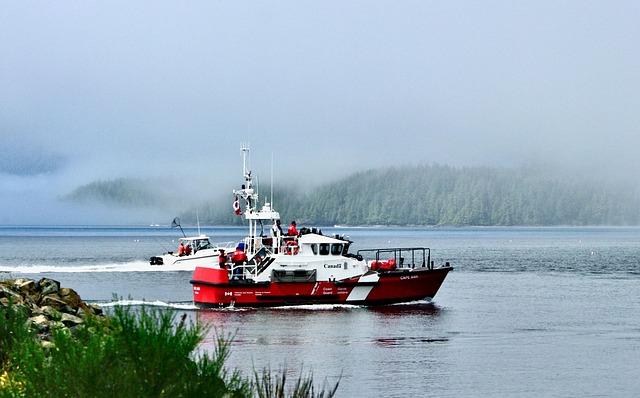
A U.S. Coast Guard helicopter successfully evacuated a patient from a vessel located off the coast of San Francisco on [insert date]. The operation, conducted under challenging conditions, highlighted the agency’s swift response capabilities and commitment to maritime safety. Details regarding the patient’s condition and the circumstances leading to the emergency remain under investigation.
Coast Guard Helicopter Conducts Emergency Maritime Medical Evacuation Near San Francisco
In a swift response to a medical emergency, a U.S. Coast Guard helicopter was deployed to safely evacuate a critically ill patient from a commercial vessel approximately 15 miles offshore of San Francisco. The patient, experiencing severe cardiac distress, required immediate transport to a specialized medical facility. The aircrew executed a precise hoist maneuver amid challenging coastal winds and dense fog, showcasing their extensive training and operational expertise.
Critical details of the mission include:
- Time of evacuation: 03:45 PM PDT
- Helicopter model: MH-60 Jayhawk
- Distance from shore: 15 miles west of San Francisco
- Medical condition: Acute cardiac distress
- Receiving hospital: UCSF Medical Center
The operation highlights the Coast Guard’s commitment to maritime safety and rapid emergency medical response along the bustling Pacific Coast.
| Mission Element | Details |
|---|---|
| Helicopter Crew | 4 Members (Pilot, Co-pilot, Flight Mechanic, Rescue Swimmer) |
| Weather Conditions | Overcast, gusty 20 knots |
| Duration From Call to Medical Facility Arrival | 45 minutes |
Challenges and Protocols in Offshore Patient Rescue Operations
Executing an offshore patient rescue involves navigating a complex array of challenges, often under time-sensitive and hazardous conditions. Pilots and medical crews must contend with unpredictable weather, turbulent seas, and limited visibility-all while precisely coordinating the hoisting operation to ensure the patient’s safety. Communication between the ship’s crew and the rescue team is crucial, requiring clear, concise exchanges to avoid any critical delays or misunderstandings. Additionally, the physical constraints of the rescue zone, such as the ship’s movement and available deck space, further complicate the extraction process.
Standard protocols emphasize thorough pre-mission planning and continuous risk assessment. These include:
- Real-time weather monitoring and contingency route mapping
- Use of advanced navigation and positioning systems
- Immediate medical evaluation upon retrieval
- Strict adherence to safety gear and hoisting procedure checklists
| Protocol Element | Description |
|---|---|
| Communication | Continuous, clear updates with ship and helicopter crew |
| Safety Checks | Pre-flight equipment and personnel gear inspection |
| Medical Support | Onboard paramedic ensures patient stability |
| Evacuation Timing | Executed during optimal weather windows |
Enhancing Preparedness Recommendations for Future Coast Guard Medical Evacuations
In light of recent successful medical evacuations, key strategies to bolster Coast Guard readiness focus on advancements in communication technology, rigorous crew training, and enhanced coordination with maritime operators. Emphasizing real-time data exchange between ship crews and Coast Guard pilots can dramatically reduce response times and improve situational awareness. Investing in simulation exercises that mimic challenging weather and sea conditions will ensure crews remain adept at handling diverse emergency scenarios, thereby elevating the overall mission success rate.
Furthermore, a collaborative approach involving stakeholders such as maritime companies, healthcare providers, and emergency response units is essential. Recommendations include:
- Standardized medical reporting protocols onboard vessels
- Pre-arranged landing zones clearly marked on large ships
- Joint emergency drills incorporating all involved parties
- Periodic review of evacuation equipment for upgrades
| Preparedness Element | Current Status | Recommended Improvement |
|---|---|---|
| Communication Systems | Basic VHF radio | Satellite-integrated platforms |
| Crew Training | Annual drills | Quarterly high-fidelity simulations |
| Landing Zone Identification | Ad hoc on-site markings | Permanent illuminated markers |
| Equipment Maintenance | Routine checks | Automated diagnostics |
To Conclude
The successful helicopter evacuation off the coast of San Francisco underscores the vital role of the Coast Guard in maritime safety and emergency response. As investigations continue into the patient’s condition and the circumstances of the incident, authorities reaffirm their commitment to rapid, coordinated efforts in safeguarding those at sea. Further updates will be provided as more information becomes available.